AiBeacon: A case study by New Nostalgia
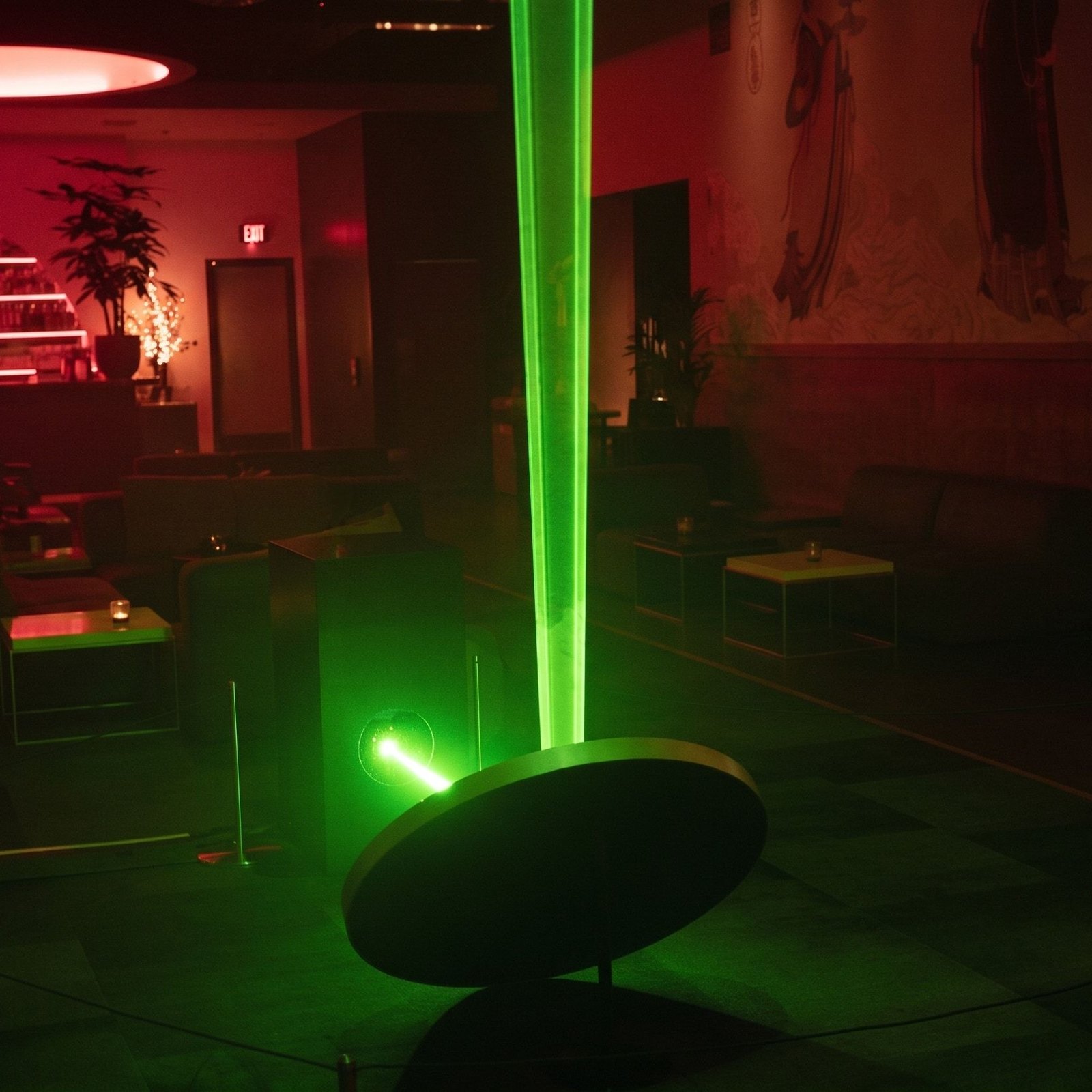
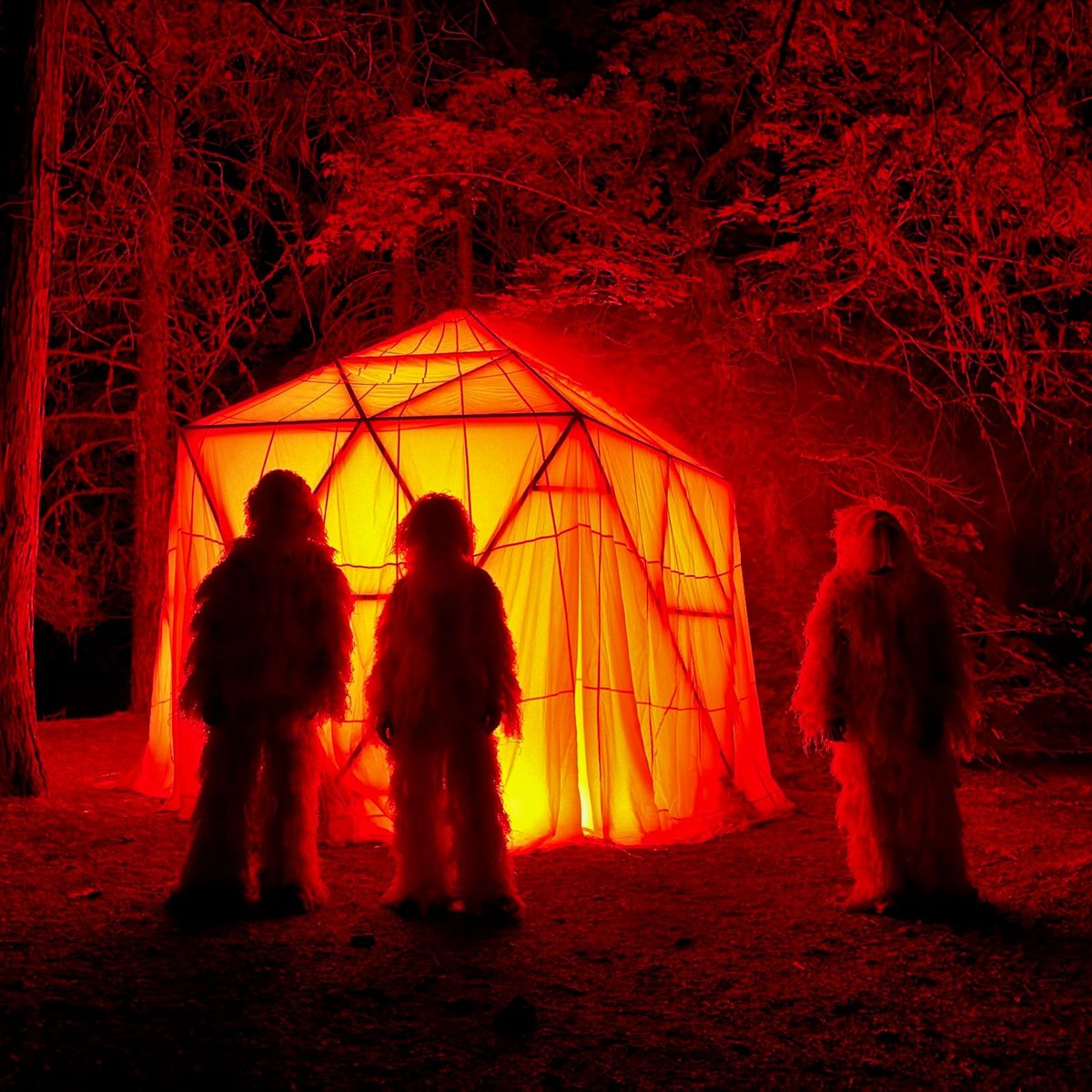
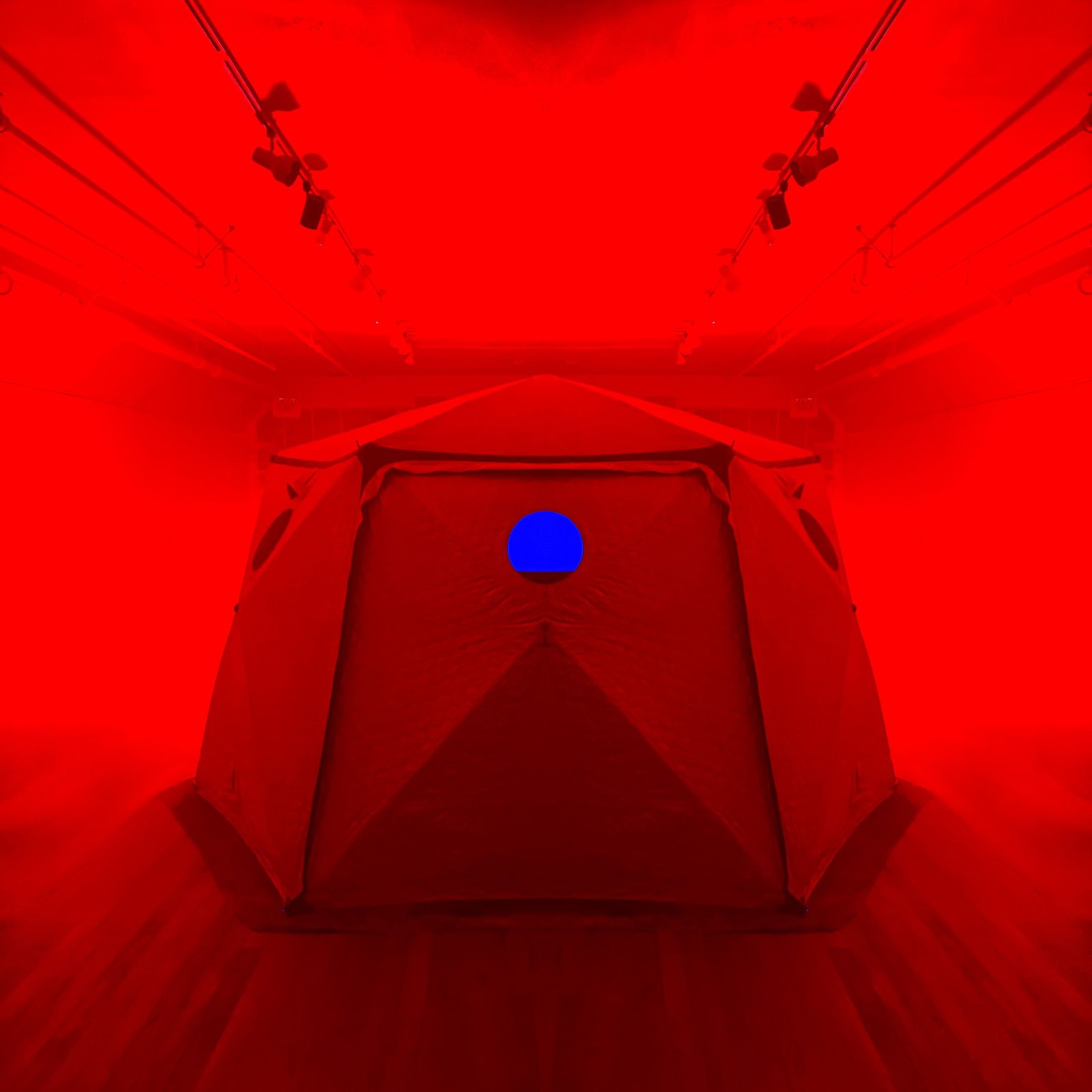
AiBeacon was a series of parties showcasing a large, audio-reactive laser installation. We were motivated to build a metaphorical and physical ‘beacon of light’ to inspire the upcoming creative class in response to the emerging threat of DIY performance from AI technology. We are not against AI technology but rather critical of the over-zealous messaging and exaggerated claims about creating a healthier, more connected society. The delivery of our ideas was rooted in satire and post-irony as we parodied a fake tech company building AI technology.
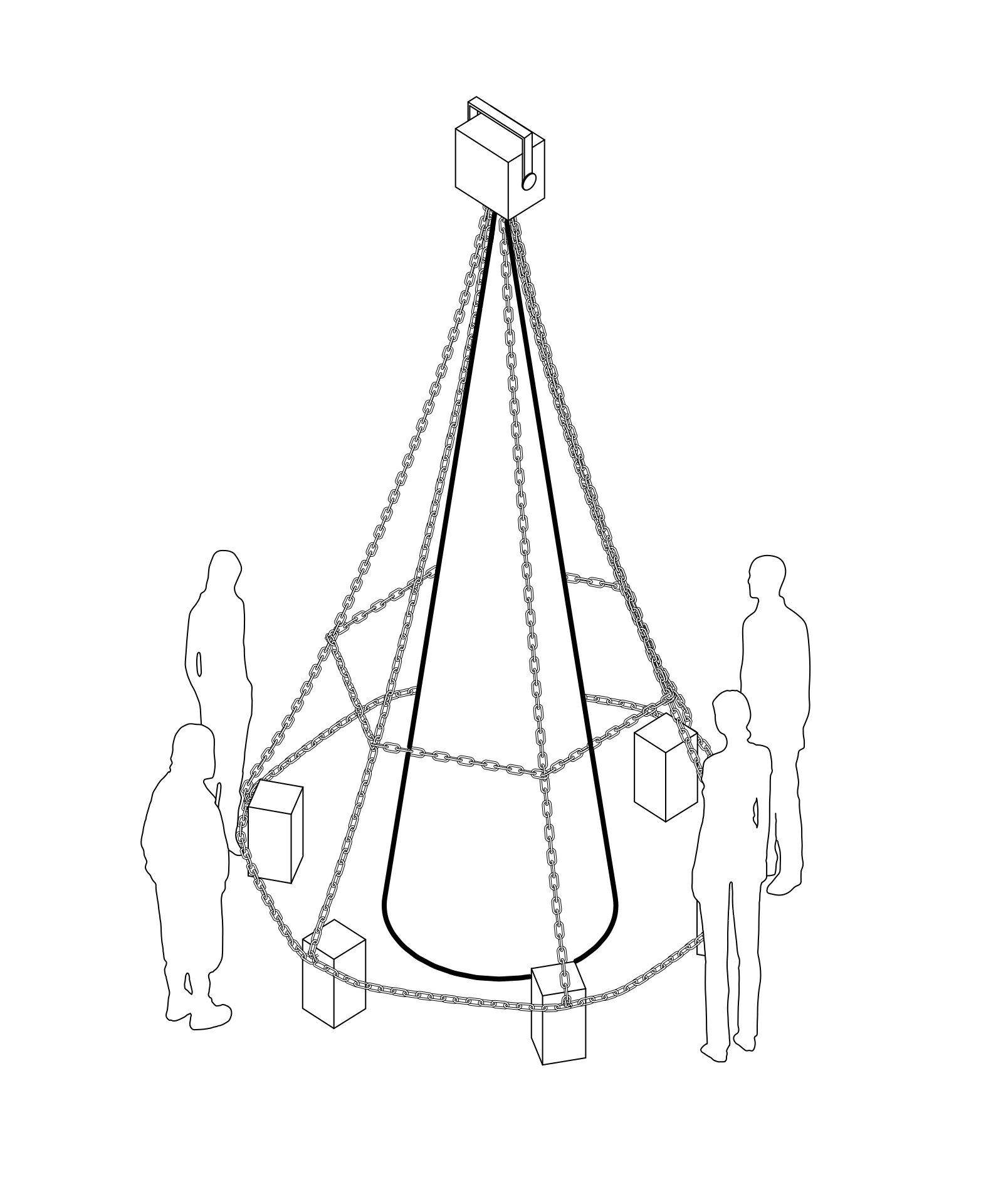
AiBeacon1, 10-Watt Laser, Chainlink, Cinderblock, 32-Speaker Array
INVT DJing at AiBeacon2
AiBeacon3, 34-Watt Laser, 10-Watt Laser, LED Array, Stage Light, ABS Plastic, Street Barricade, Full-Range Speaker
Photo Wyatt Slate
AiBeacon2, 34-Watt Laser, LED Array, Stage Light, ABS Plastic, Street Barricade, Full-Range Speaker, Subwoofer
Photo Alex Supica
Flyer for AiBeacon2
Graphic Ryan Orsmby, Osebo Akhigbe
Slide from the NN pitch deck
Graphic Ryan Orsmby
Slide from the NN pitch deck
Graphic Ryan Orsmby
Inside the NN office
Photos Colby Xavier Riley
In San Francisco, AI is the new reality.
1. The Gold Rush
Large numbers of ambitious young people move to San Francisco every year inspired by rhetoric like the quote above. For curious, high-achieving young people, working for a tech company is the dharmic way to express creative freedom.
Documented in Andrew Ross’ No Collar: The Humane Workplace and Its Hidden Costs1, and further expressed in Anna Wiener’s recent best-seller Uncanny Valley2, the tech industry is particularly good at cultivating work environments and ideologies that appeal to talented young people’s desires for impact and belonging. The industry’s progressive attitudes, minimalistic office designs, and high pay are compelling, inspire optimism over logic, and are downright seductive.
Artificial Intelligence (AI) is the latest technology that has promised an unprecedented level of self-optimization: a world in which the enterprising and creative output is limitless. Tasks that previously took days can now take minutes. Accelerating cancer research, simulations to mitigate pollution, speech recognition for the disabled, and accessible education are a fraction of the possibilities now available. AI is the bright-eyed, poster child of tech optimism.
2. All That Glitters Isn’t Gold
The observable applications of consumer-facing AI have been less than spectacular despite all the bold claims of this technology.
Instead of solving the great challenges of the world and building a more connected society, we’ve been given text-to-voice models of Drake and Lil Uzi Vert, deepfakes, AI girlfriends, and an endless supply of image, video, and text slop.
Amidst all of this, widely broadcasted AI claims have reached new levels of absurdity. Why are some AI-enabled B2B payroll companies declaring that “AI is going to save humanity?”
A billboard announcing an enterprise AI application is impossible to miss for those driving between San Francisco International Airport (SFO) and the city on Route 101. Simply by adding the prefix “AI” to a name, multiple companies seek to embolden their perception of being highly efficient and productive.
AI democratizes the ability to create at hyper-speed rates without regard to the intention. An imminent battle for the soul of Western culture has been exacerbated by AI hijacking creative output. Thousands of the playlisted deep house songs on Spotify are AI-generated. More and more of the memes that our families’ interact with on social media are AI-generated. Recent undergraduates lag in interview response times because they’ve become accustomed to AI thinking for them.
There’s an undeniable threat to creatives that AI poses, and the effects of this behavior. There are new AI softwares that can build an entire DJ set, compose 100% original music, program an entire light show. The DIY and human ethos of performance is in the crosshair.
3. A Beacon of Light for Creatives
In response to the isolating and existential threat of AI for creatives, we built AiBeacon. It centered around a metaphorical and physical beacon of light that everyone can gather around.
Just as for centuries humans have been drawn to experience bonfires in communal settings, AiBeacon brought large and small groups of people together to experience a large, bright, dynamic light. The light is what draws people together, but the communal experience has such a powerful and positive impact that it creates a sense of belonging and meaning for participants.
A key element of the experience for us was actively building something new. Humans can only begin to imagine alternate futures for themselves once shown what’s possible. Through his writings on lost futures, music critic and cultural theorist, Mark Fisher3 influenced us to build a perspective-shifting experience that felt completely new.
Modern event lasers are traditionally pointed above the heads of crowds, creating a 2D plane of light (primarily for attendees’ safety). By pointing the laser down from ground to ceiling, a new third dimension is possible—depth. This allows for an entirely new set of shapes, cues, and pulsating mechanics. In addition—the focal point of the event shifts from the DJ—to the light: the beacon.
4. Artificial, Artificial Intelligence
We spent months designing and prototyping a laser installation in our Mission studio, performing the cues and colors alongside live music. We controlled all the cues and patterns based on intuition and taste, there were no AI features or mechanics. We named the experience AiBeacon as a tribute to what is possible when curious high-achievers use technology creatively to seduce others into a positive shared experience.
AiBeacon was a human-centered performance project inspired in part by theories that all technology emanates from those who bring it to life. Silicon Valley businesses have a history of obscuring the fact that they represent their products as having been developed by automation without human involvement, when in fact, they rely on human labor, often outsourced to places with less than favorable working conditions, which do all the ‘dirty’ work behind the scenes. We believe that “Algorithms are ultimately made of people.” This tenet is pointed to by technologist and author Mike Pepi in his book Against Platforms4.
We cosplayed as a fake tech company, claiming it was building Ai experiences that inspired and connected humanity. In reality, we were just throwing a rave. The ironic feedback loop is that when attendees would come, they would feel inspired and connected. If other companies used an “Ai” prefix to embolden their impact, why couldn’t we?
The true productivity gains and advancements in research that have come from AI shouldn’t be discredited—there are undeniable benefits. This project was built step-by-step alongside chatGPT, Claude, and stable diffusion. How else do you learn about Baudrillard’s fatal strategies, using geometry to build our plastic barrier, and how to render images to convince Gray Area to let you throw a party?
“Use AI—don’t let it use you.” - New Nostalgia
Inside the NN office
Photos Colby Xavier Riley
Citations
- 1 Ross, John. No Collar: The Humane Workplace and Its Hidden Costs. Temple University Press, 2004
- 2 Weiner, Anna. Uncanny Valley: A Memoir. MCD Books, 2020
- 3 Fisher, Mark. Ghosts of My Life: Writings on Depression, Hauntology and Lost Futures. John Hunt Publishing, 2014
- 4 Pepi, Mike. Against Platforms: Surviving Digital Utopia. Melville House, 2025
Published by
- Editors:
- Aakash Malhotra, Brendan Luu
- Writer:
- Aakash Malhotra
- Graphic design:
- Brendan Luu
- Printing:
- New Nostalgia Group, or you
Production by
- Technical direction:
- Jordan Ponciano
- Managing direction:
- Aakash Malhotra
- Creative direction:
- Brendan Luu
- Lighting operators:
- Karla Limon, Justice Park
- Laser operator:
- Garrett Brown
- Sound engineer:
- Kian Schureman
© New Nostalgia
Created in San Francisco, CA, USA
All rights reserved
First edition, March 2025